
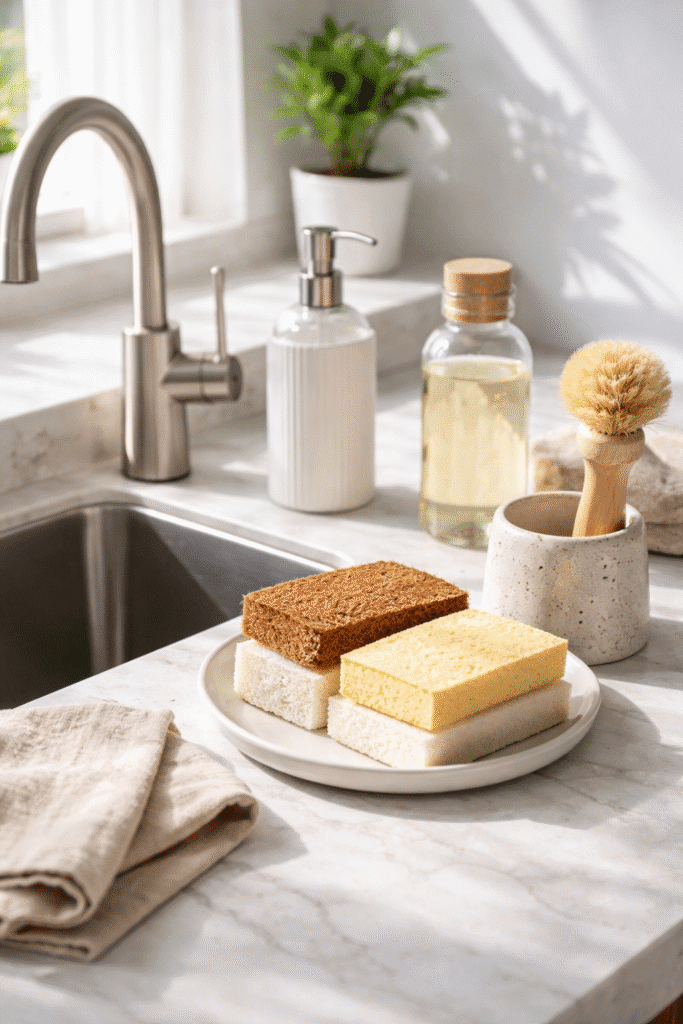
Dish sponges are one of the most overlooked items in the kitchen. They’re used daily, stay wet, touch food-contact surfaces, and are often kept far longer than they should be. Yet most people have no idea what their sponge is made of, how it breaks down, or when it should be replaced.
This guide explains what dish sponges are, how different types work, and what actually matters for hygiene, safety, and durability—without pushing products.
What Is a Dish Sponge, Really?
At its core, a dish sponge is a porous cleaning tool designed to trap debris and scrub surfaces. The problem is that the same porous structure that makes sponges effective also makes them ideal environments for bacteria, mold, and odor-causing microbes.
The material, structure, and drying ability of a sponge determine whether it stays relatively clean—or turns into a bacteria reservoir.
The Main Types of Dish Sponges (By Material)


1. Cellulose Sponges
Made from plant-based cellulose (usually wood pulp).
Pros
- Highly absorbent
- Soft and flexible
- Biodegradable in many cases
Cons
- Can stay wet for long periods
- Can harbor bacteria if not dried properly
Cellulose sponges are common because they balance performance and cost, but they require frequent drying and replacement.
2. Synthetic Foam Sponges
Typically made from petroleum-based plastics like polyurethane.
Pros
- Cheap
- Long-lasting structure
Cons
- Shed microplastics
- Not biodegradable
- Can melt or deform with heat
These sponges dominate grocery stores but raise concerns around microplastic pollution and long-term environmental impact.
3. Loofah Sponges
Made from dried fibrous gourds.
Pros
- Fully plant-based
- Naturally abrasive
- Compostable
Cons
- Less absorbent
- Can grow mold if left wet
Loofahs dry quickly when properly ventilated, which helps reduce bacteria—but only if they’re stored correctly.
4. Coconut Fiber & Plant-Fiber Sponges
Made from coconut husk, agave, or other stiff plant fibers.
Pros
- Durable
- Naturally abrasive
- Low plastic content or plastic-free
Cons
- Can be too rough for delicate surfaces
- Less flexible
These are often used as scrubbers rather than traditional sponges.
Why Dish Sponges Get So Dirty So Fast
Sponges combine three things bacteria love:
- Moisture
- Food particles
- Warm temperatures
Studies consistently show that kitchen sponges can contain millions of bacteria per square inch, especially when used for multiple tasks like wiping counters and washing dishes.
The issue isn’t that sponges are “dirty”—it’s that they’re rarely replaced or dried properly.
How Often Should You Replace a Dish Sponge?
As a general guideline:
- Every 1–2 weeks for traditional sponges
- Weekly if used heavily or kept damp
- Immediately if it smells, feels slimy, or discolors
Boiling or microwaving a sponge may reduce bacteria temporarily, but it does not reset the material or remove trapped debris.
Replacement matters more than sanitizing.
Sponge Hygiene: What Actually Helps
Things that genuinely make a difference:
- Squeezing out excess water after every use
- Storing sponges upright so air can circulate
- Using separate tools for dishes vs. counters
- Letting sponges fully dry between uses
Things that help less than people think:
- Constant sanitizing without drying
- Keeping sponges submerged in sinks
- Using one sponge for everything
Drying is the single biggest factor.
Dish Sponges and Microplastics
Synthetic sponges slowly shed microscopic plastic particles during use. These particles:
- Go down the drain
- Enter waterways
- Persist in the environment
Plant-based sponges reduce this issue, but only if they truly avoid plastic fillers or synthetic binders.
What Actually Matters When Choosing a Dish Sponge
From a functional and health standpoint, the most important factors are:
- Drying speed
- Material transparency
- Replacement frequency
- Surface compatibility
Price and brand matter far less than how the sponge is used and maintained.
Final Takeaway
Dish sponges aren’t harmless little tools—they’re high-contact, high-risk kitchen items that deserve more thought than they get.
You don’t need a “perfect” sponge.
You need one that:
- Dries well
- Fits your cleaning habits
- Gets replaced regularly
Understanding the basics goes a lot further than chasing gimmicks.